
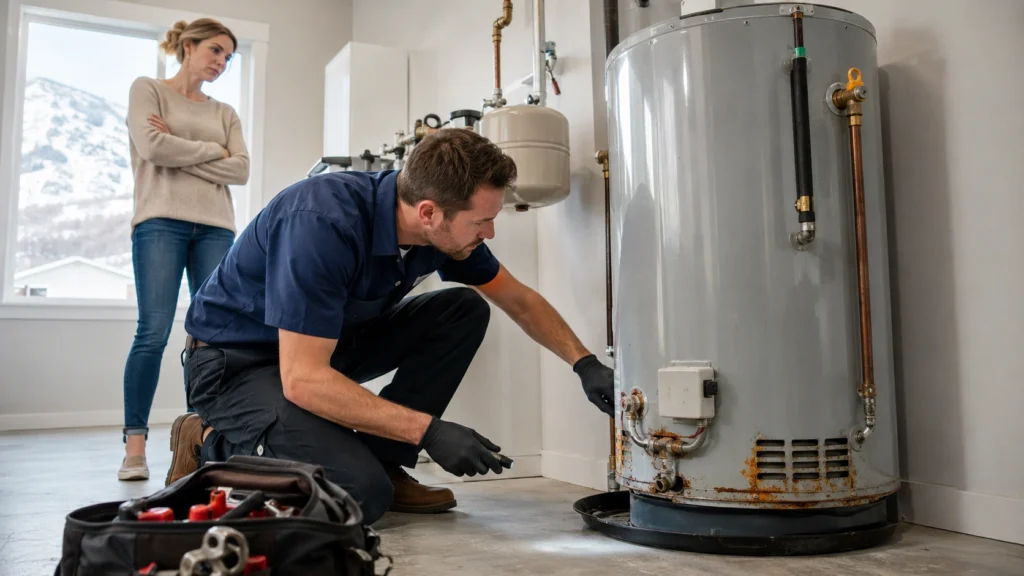
Your water heater works quietly in the background every day. It gives you hot water for showers, dishes, laundry, and cleaning. Because it usually sits out of sight, it is easy to forget about it until something goes wrong.
Unfortunately, many homeowners wait until the tank starts leaking or stops producing hot water before calling a plumber. By that point, the problem may already be serious.
Knowing the warning signs of a failing water heater can help you act before you are dealing with water on the floor and no hot water in the house. In some cases, a simple repair may solve the problem. In others, water heater replacement may be the safer and more cost-effective choice.
Here are seven signs that it may be time to replace your water heater.
1. Your Water Heater Is Getting Old
Age is one of the biggest factors when deciding whether to repair or replace a water heater.
Traditional tank water heaters do not last forever. As they get older, internal parts wear down, sediment builds up, and the tank itself can become weaker.
You may not notice a problem right away. The unit can still produce hot water while slowly becoming less reliable.
Watch for these signs that age may be catching up with your system:
- You are calling for repairs more often.
- Your hot water does not last as long as it used to.
- The tank makes more noise than before.
- Your energy bills seem to be increasing.
- You see rust or corrosion around the unit.
If your water heater is older and starting to have several problems at once, replacing it may make more sense than continuing to pay for repairs.
2. You Keep Running Out of Hot Water
A healthy water heater should provide enough hot water for your household’s normal needs.
If your showers are suddenly turning cold halfway through or your family has to wait longer between showers, something may be wrong.
Sediment buildup is a common cause. Minerals in the water can settle at the bottom of the tank over time. This buildup takes up space and can make it harder for the system to heat water efficiently.
Heating elements or other internal parts may also begin to fail.
You might notice:
- Hot water runs out faster than normal.
- Water never gets as hot as it used to.
- The temperature changes during a shower.
- It takes longer for hot water to return.
Sometimes these problems can be repaired. However, if the unit is older and losing capacity, water heater replacement may give you better performance and more dependable hot water.
3. You Hear Popping, Banging, or Rumbling Sounds
Your water heater should not sound like someone is knocking around inside the tank.
Popping, banging, cracking, or rumbling noises often point to sediment buildup.
As water heats underneath hardened sediment, steam bubbles can form and burst. This creates the strange noises you hear coming from the tank.
A noisy water heater does not always mean immediate replacement is needed. Flushing the tank may help in some cases.
However, heavy sediment buildup can make the system work harder and place extra stress on the tank.
Over time, this can lead to:
- Lower heating efficiency
- Longer heating times
- Higher utility costs
- Extra wear on internal parts
- Increased risk of tank failure
If the noises keep coming back, especially with an older water heater, it is smart to have a professional inspect the system.
4. Your Hot Water Looks Rusty or Discolored
Hot water should look clear.
If you turn on a hot water faucet and notice brown, orange, or rusty-looking water, your water heater could be developing corrosion inside the tank.
First, check whether the discoloration happens with both hot and cold water.
If only the hot water looks rusty, the problem may be connected to the water heater.
Rust inside the tank is a serious warning sign because corrosion can weaken the metal. Once the tank itself begins rusting through, it usually cannot be repaired.
That is when replacement becomes important.
Ignoring corrosion may eventually lead to a leak or complete tank failure.
A plumber can inspect the water heater and determine whether the discoloration is coming from the tank, pipes, or another part of the plumbing system.
5. You See Moisture Around the Water Heater
A small amount of moisture around your water heater should never be ignored.
Sometimes water comes from a loose fitting, valve, or connection that can be repaired. Other times, moisture may mean the tank itself has started to crack or corrode.
Check around the base of the unit for signs such as:
- Small puddles
- Damp flooring
- Water stains
- Rust around the bottom of the tank
- Slow dripping from connections
- Moisture that keeps returning after cleanup
A leaking tank can become much worse without warning.
If the tank itself is damaged, repair is usually not an option. The safest solution is often water heater replacement before a small leak turns into major water damage.
6. Your Energy Bills Are Going Up
An older water heater may still work while using more energy than it should.
Sediment buildup, worn heating parts, and poor efficiency can force the system to run longer to heat the same amount of water.
That extra work can show up on your monthly utility bill.
You may also notice that the water takes longer to heat or the system seems to run more often.
A newer water heater may offer better efficiency and more consistent performance. Depending on your home and hot water needs, replacing an aging unit can also reduce the stress of repeated repairs.
A professional plumber can help you compare the cost of repairing your current unit with the long-term value of installing a new one.
7. You Are Paying for Repair After Repair
One repair does not always mean you need a new water heater.
But when repairs start becoming a regular event, the costs can add up quickly.
You may replace one part only to have another part fail a few months later. Eventually, continuing to repair an aging unit may cost more than replacing it.
Consider replacement when:
- The water heater has needed several recent repairs.
- Repair costs are becoming expensive.
- The system is older and less efficient.
- Hot water problems keep returning.
- You are worried about the tank leaking unexpectedly.
A new unit can give you greater reliability, steady hot water, and peace of mind.
Do Not Wait for the Tank to Fail
Water heaters rarely last forever, and waiting until the tank starts leaking can turn a manageable plumbing problem into a stressful emergency.
Pay attention to changes in water temperature, strange noises, rusty water, rising energy bills, moisture, and repeated repairs. These warning signs can help you know when it is time to have the system professionally inspected.
Right Way Plumbing can help determine whether your water heater still has useful life left or whether water heater replacement is the better choice for your home.
Taking action early can help protect your property, avoid unexpected cold showers, and give your family dependable hot water again.
Contact Right Way Plumbing today to schedule a water heater inspection and get clear guidance on the right next step for your home.